
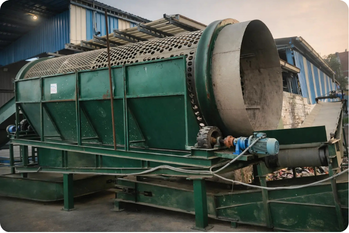
20 tonnes per day
20 TPD Waste Facility
A complete municipal-scale processing line, delivered as a turnkey project from layout design through to commissioning.
View site photos + video →Hotels. Defence. Industry. Institutions. Large waste-processing sites. COMPOSTO systems are built, installed and supported for very different operating conditions.




















Choose a sector closest to your requirement. Open any installation to see its site photographs and available walkthroughs.
A complete municipal-scale processing line, delivered as a turnkey project from layout design through to commissioning.
View site photos + video →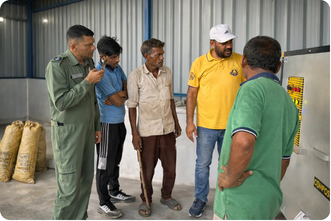
On-site organic waste processing for a defence establishment, installed under station procurement norms.
View site photos →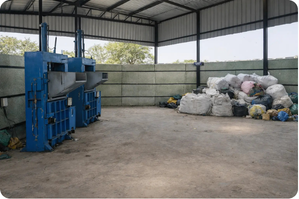
A mid-scale processing line with automated sorting and conveyor handling.
View site photos + video →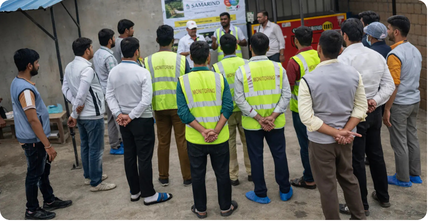
Daily canteen and process waste handled inside an operating manufacturing facility.
View site photos →
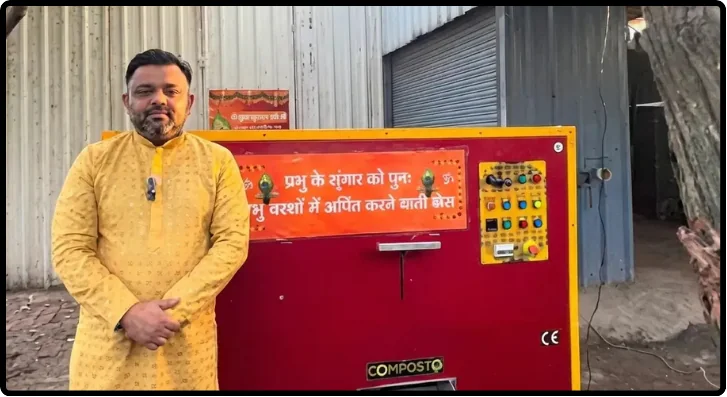
Daily floral offerings and nirmalya converted to compost on the temple premises.
View site photos →
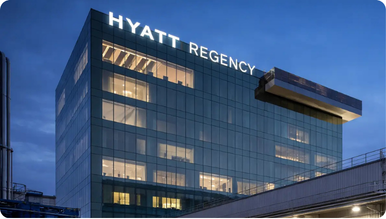
Daily kitchen waste processed in the back-of-house area of an operating five-star hotel.
View site photos →
On-site organic waste conversion for a resort with seasonal occupancy swings.
View site photos →No installations in that category yet.
Capacity is only one decision. Space, waste profile, operating routine and utilities change the final installation.
Mixed municipal waste arriving in bulk, with no segregation at source and no existing processing infrastructure on the site.
A full processing line — feed conveyor, shredder, trommel screen and ballistic separator — laid out around the site's existing access roads so tipping vehicles could turn without reversing.
Organic fraction is now separated and composted on site instead of being transported to landfill. The facility runs as a continuous line rather than in batches.
A defence campus with messes and residential quarters spread across a large area, where moving wet waste to a single central point was impractical.
A decentralised layout — waste is processed close to where it is generated, which keeps collection distances short and avoids odour along internal roads.
Wet waste is handled inside the station boundary. Compost output is used on the station's own landscaping.
A daily intake too large for standalone machines, but not large enough to justify a full municipal plant footprint.
A compact 5 TPD line with automated sorting and conveyor transfer between stages, sized to fit the plot the authority had available.
Continuous daily processing with minimal manual handling between stages.
An industrial unit needing to process canteen waste on site to meet its environmental compliance commitments, without disrupting plant operations.
A machine sized to the canteen's daily output, sited away from production areas with its own power feed and drainage.
Wet waste no longer leaves the premises. Processing records are available for the unit's compliance reporting.
Large volumes of flowers, leaves and offerings every day — a waste stream that is bulky, very wet, and traditionally not sent to ordinary municipal collection.
A machine configured for high-moisture floral waste, with shredding tuned for stalks and garland thread, installed in the temple's service area.
Offerings are returned to the temple gardens as compost rather than being dumped or immersed in water bodies.
A hotel kitchen generating wet waste through the day, with zero tolerance for odour anywhere guests might reach.
A closed-system machine with bio-filter and exhaust management, installed in the service corridor and operated by the existing housekeeping team after on-site training.
Kitchen waste is processed within the building. The hotel can evidence on-site wet waste processing for its sustainability reporting.
Occupancy that swings sharply between peak season and off season, so waste volumes are never steady.
A machine sized for the average rather than the peak, with peak-season overflow handled across two cycles instead of buying unused capacity.
The resort processes its own wet waste year round, and compost goes back into the property's landscaping.
Factory-direct supply, installation and service support across major Indian markets. Planning a similar installation? Start with your city, waste quantity and property type.
Yes. We arrange site visits to a running installation near you wherever the client agrees, and you are always welcome at our works to see machines under fabrication. For institutional and municipal buyers we can also share commissioning documentation from comparable projects.
A standalone machine up to 200 Kg per day is typically installed and commissioned in one to two days once the civil base and power point are ready. Larger 500 Kg units take longer, and turnkey plants run to a project schedule agreed after the site survey.
A level concrete base, the correct power supply at the machine position, a water point, and drainage. We send drawings with the exact base dimensions, load, power rating and service clearances well before dispatch, so the civil work can be completed in parallel.
Yes. We have supplied municipal corporations, development authorities and defence establishments, and we can provide the technical documentation, compliance certificates and past-performance details normally required in tender submissions.
Your own staff. Housekeeping or kitchen teams are trained on site during commissioning — daily operation is loading the machine and removing the output, not technical work. AMC covers the servicing.
Yes. The installations on this page span Delhi NCR, Uttar Pradesh, Punjab and Jammu, and we dispatch across India. Freight and installation are quoted separately based on your location.
Tell us your city and property type. Where the client agrees, we can arrange a visit to a working installation near you.
Send project details instead →